
Children can start thinking about bringing Christmas cheer to others
Christmas is the most wonderful time of year, here are parenting tips that can help your child spread Christmas cheer.
So many things to do and so many things to think about, plan for and to do before Christmas. With the children getting ready to leave school for the year, how about turning their heads to positive thoughts about sending good wishes to others? This is the season where gratitude and empathy are strong emotions that come out in our thoughts about people. It is a wonderful opportunity to build relationships, reconnect with others, build bridges and reconcile old wounds. It is a time to teach our children how to be the best at Christmas time and to see the best in others.
Consider:

Invite your child to think about who they want to thank for all their help over the year. Invite them to make a list and reflect on how others have been instrumental in supporting them. Talk about how they could thank them. Some may be verbally thanked, others may receive a card etc.
This is a great time for craft activities. Give the children polystyrene balls to let them create their own Christmas ball for the tree. This ball should be relevant to 2022 and tell a story about how the year has been for them. Making decorations for the tree has endless possibilities.
Invite your child to keep a journal, this can be like a pre-Christmas calendar, only each day talks about something that has happened leading us happily to Christmas. It could be simply writing in:‘Today, December 1st I hugged my best friend.’ Each day has a happy statement about making Christmas a positive experience. It can be simple, but have a punch.
Talk to your child about how you will thank their teacher and discuss what you want to say. Point out that it is about how their teacher has helped them throughout the year.
Gift giving can be great, but it can get out of hand. Can some of these gifts be simple objects like scented candles that come with a message? Children need to learn that the size of the gift is not as important as the words on the card. Perhaps the card can be made by the child. Sometimes just a simple visit and a thank you is all you need to do.
How about talking to your child about visiting family or friends not seen for a while? Invite them to think about who that would be. This is about inviting them to reflect on the less noticed and bringing them into the fold. Stepping outside our comfort zones is all about the Christmas spirit lived.
There are many charities around at this time of the year. Could it be a time for your child to clear out their old toys and unused games? They could take them to one of the Christmas donation centres as part of their annual Christmas clear out.
There are Christmas trees around town, set up to donate a gift to a child disadvantaged. Is it possible that your child buys a small gift using their pocket money? Let them reflect on giving to others less fortunate. This is called compassion.
Class teachers in the last few weeks talk about the spirit of giving and sometimes school or the classroom takes a focus at Christmas. Is this something you can be part of as well as the family preparations for Christmas? Take part in school concerts class, Christmas lunches etc. Bring the season to life in many ways.
Families will have many traditions over this time and it is important that those rituals are kept. Whatever your ritual consider the possibility of being a little more inclusive. This shows your child that you are inclusive and want the spirit of Christmas to be an open, not a closed environment.
Remember, Christmas is a warm and happy time. When planning all the busy activities, try to let your child see the joy in the preparation and not the burden. It can be tiring but part of the joy is the anticipation and the waiting. After all, Father Christmas is coming!
There is so much to think about at Christmas time and it is easy to simply follow the usual patterns. Make this Christmas a little different by introducing some new element that lifts the spirit and highlights the uniqueness and opportunities in each new Christmas. Do this with your child so that they see that being creative, enriches each year with a new spirit of the season and a new direction.
‘Christmas isn’t a season, it’s a feeling.’
-Edna Ferber

Keep smiling it works!
Children's smiles are their greatest gift. Here are some parenting tips that can assist and remind you of the power of positivity and smiling through life.
I have heard it said that your most powerful gift (or call it weapon) is your smile. It has such potential to change situations and it can turn opinions and attitudes quickly on their head. It is simply a warm expression which sends a message to the other person that all is well and I am feeling pleased.
This short article is to remind us that when situations become too difficult or everything becomes overwhelming, just try smiling. Apart from anything else, it naturally reduces immediate anxiety.

A child reads much into a smile. For them it is a comforting message and one which reassures them that you are pleased and happy with your child. It says the world is a good place. This ongoing reassurance feeds into their feeling of being safe and secure and above all liked.
Here are some thoughts on the value of smiling.
When you are having a down moment with your child and don’t quite know how to respond, just smile and leave it at that for a while.
Reflect on each day and consider how often you smile at your child or any other situation that could bring a smile to your face. Children notice your responses to situations. Be a regular smiler, it has fringe benefits!
Leaving happy smiley notes around the house or placed in your child’s lunchbox can be a spontaneous thought for the child of feeling positive.
A smile sheds light on many situations. Even when you see a difficult situation is their scope for shedding some light and brightening the moment?
Having family meals together is a great time to smile and have a laugh at some happy times during the day. A smile ejects positivism and is registered by your child that all is well.
Try to see the bright side of life and this will automatically put a smile on your face. Children love to see that you have picked up on the bright side of any situation. Remember, keep the glass half full.
Children smile a lot. It is generally natural for them to feel happy. Encourage that happy disposition and try not to dampen their positive feelings which come to the surface quite naturally.
Talk about happy people that make you smile. This teaches a child that being happy is a valued disposition because they bring light into other people’s life.
I remember that often children would ask me to be with teachers that were happy and smiled a lot. They knew that such a disposition would be the best learning environment for them. If the child is happy, the child learns.
By smiling regularly, you are showing your child that being happy is a very good space in which to live. Smiling also has a way of drowning out those grumpy attitudes that can appear in family members. Smiles always win the day.
´Before you put on a frown, make absolutely sure there are no smiles available.’
- Jun Beggs

Finding a happy balance for your child
Creating a happy balance between everyday tasks is an important topic for children’s learning. Read some parenting tips on how to balance daily activities.
We all lead busy lives. Sometimes those lives can consume us and we build into them more and more activities, jobs, special events, etc. It is in fact that our society rewards doing more and demonstrating that if you are a busy person, it is seen as success.
Our culture rewards and respects being busy. Of course, there is nothing wrong with busy. I would however, be recommending that you become conscious of the balance that you put into the week and this of course will flow over into your child’s perception of how a week should look.
Finding balance is a gift you can give yourself and especially a lifelong gift for your child. Some people are automatically drawn to putting balance into their lives, for many of us it is a struggle, especially when more seems better. Remember that if you teach your child to have balance between work, home, school, friends, etc. they will want that gift for the rest of their life. They will not be drawn to excessive demands and they will reflect on the various choices they are making that give them balance and make them feel happy. Here you are awakening their consciousness about being a happier person.
Once a balanced person always a balance person.
Here are some ideas to teach your child that balance is the best way to live out the daily, weekly, experiences. True balance is built on a solid foundation.

Show your child how you plan the week. Discuss why some things are chosen and others discarded. If you enjoy your recreation time show them how this is an important part of the week, one which is not compromised.
Keep a chart on the fridge which highlights the week’s activities. Talk about how some things must stay but others can go if the balance is to be maintained.
When you make a decision to let something go even though it was important, talk to your child about that action. Tell them that life can be flexible and can adjust to make for a balanced week.
Talk about how the school week is set up and how the lessons are planned so that a balanced curriculum is the order of the day. Children love routine and feel very comfortable knowing what is planned for the week. This is a chance to talk about balance in the school setting.
If something important comes up with your child, discuss how it would sit with the rest of the week’s plan. Will other activities need to change to keep the balance? What’s in their control? What is it that tips the balance?
Teach your child to reflect on themselves and how some busy situations can make them unsettled. Can they change that and do they really know their priorities? This is all about understanding that they are individuals and don’t always have to go with the flow.
Teach them that not everything is under our control. They need to learn what is in their control and what is not under their control.
Mindfulness talks about living in the moment. Perhaps teaching our children how to enjoy the moments and not focus on building busy changeable lives.
Some things are worth holding onto and others maybe not so. Invite conversations about what is necessary and what is disposable. This is all about finding balance that is controllable.
Cooking with your child is an excellent way to talk about balance and how the best comes from the balance of ingredients.
Building rituals into your life helps to strengthen the notion of balance in life. A ritual or routine is familiar, comfortable, predictable, manageable and in your total control.
Above all, be open in discussion about how maintaining a balanced life is a wonderful ideal and that in your life you strive to set goals to be as balanced as possible. Sometimes we fail but our plan is to try to maintain a balance so that you live a happier day, week, month etc.
‘Teaching our children to live a quiet, sane and balanced life is one of the most important parental tasks of our day’
- Brent L Top

The art of bringing happiness to your child
A happy child is one that feels secure and has strong supports around them that intelligently allow the child to grow in an environment that is open, engaging and inclusive. As parents we try our best and the human side of us sometimes fails to hit the right mark. Here’s some tips to help bring happiness to your child - sometimes, in these stressful days, it’s important to help build a child’s level of happiness.
We are always seeking and wanting our children to have a happy life. It’s a natural instinct as a parent to embrace happiness for our children. Of course life comes in all forms and challenges will bring failures, distress, unhappiness and unwelcome surprises to a child’s life. Managing your way through that maze is part of the role of parenting. It also builds character and strengthens a child’s emotional reserve.
Here are a few thoughts that I have reached from my experiences with children that may help build a child's level of happiness.

Consider:
The first thought is that a happy parent makes for a happy child. Children will reflect your mood and sense of well being. Having the presence of a happy parent around is a strong indication to the child that the world is all well.
Keep encouraging persistence and effort. You are not rewarding perfection but you value the journey a child makes in their efforts to do well. Frequent affirmations around the efforts they make keeps the momentum going and shows the child that it is all about the ongoing contributions and not a perfect result.
By your own modelling teach them how to make friends. Show them how best you do this and what skills you need such as listening effectively, empathy, patience, humour etc. Your example will go a long way in teaching them how to build and sustain relationships.
See the optimistic approach to life. Find the positive in situations and when your child focuses on the negative, see the glass as half full. An optimistic approach attracts people and builds a strong happiness component.
We are working on building emotional intelligence in our children. This means that you should show them an intelligent approach to situations rather than using anxiety and reaction to deal with situations. Talk through with them their problems looking at a mature approach to solving matters. Of course how you personally demonstrate emotional responses to situations will teach your child, the best way possible.
Encourage self discipline. This can be done through insisting on finishing projects, completing jobs etc. Perhaps encourage children to wait for special treats rather than have everything instantly.
Be active as a family. Physical fitness and keeping engaged in activities such as sport give so much joy and feeling of self worth to growing children.
Allow failure into the life of your child. They need to learn that failure is part of life and we can learn form such experiences. This means not immediately trying to bail them out of trouble or solving their problems for them.
Slowly give your child progressive independence. Reward them with it when they demonstrate that they can be trusted. Feeling independent is a life giving experience and can be a significant growth curve for a child.
Keep play alive in your family. No matter what age everyone enjoys playing together. Find new and different ways of keeping play alive in your family.
A happy child is one that feels secure and has strong supports around them that intelligently allow the child to grow in an environment that is open, engaging and inclusive. As parents we try our best and the human side of us sometimes fails to hit the right mark. Good I say as after all we teach our children to be human.
‘Sometimes we forget that parenting like love, is a verb.’
- Jessica Joelle Alexander

Enjoy the present - it’s here for you now to enjoy
Happiness can be found in all of the smaller moments in life. You just have to stop for a moment and enjoy the present.
Did you realize that it is actually a skill to learn how to enjoy the present? Sometimes our focus is often on the past or busy planning for what next in the future. Far too often we use the present to simply prepare for the future without acknowledging the very real presence of the now. Think of how photos slow us down. We stop for a minute and reflect on that powerful image. It was a moment in time that we hold dear.
Teachers have learned the art of capturing the moment with children. Often when something special happens, a teacher will stop the class and together all children will reflect on what it is that drew their attention. This is a way of capturing memorable moments. I remember one teacher who kept a diary of those moments and at the end of the school year the children turned it into a book retelling the special moments that built up the charisma of the class.

Children that love school look forward often to the surprise highlights of the day which make for happy moments and collective joy. Teachers know that such a classroom environment where elements of the day are surprisingly highlighted, will excite children who are alive with interest.
If we notice that what we have now is giving us happiness we are more inclined to weather the unsavoury small stuff that can easily interfere with the day, lowering our mood and temperament. Did you wake up this morning and hear birds singing? Was the sun shining? Did your child give you a hug? Did you enjoy breakfast? These incidences are the small but influential stuff that can give us joy along the way.
I believe that if we highlight around our children the joy of noticing and feeling positive about the moment, it will have a positive effect on how our children monitor and identify their day. This is all about developing a healthy habit of living positively in the present.
Consider how such a disposition can be helpful in the development of emotional maturity and the mental health of your child:
If your child looks to see what is good and happy around them, will they not feel better in themselves?
Children who are by nature happy attract other children who like to feel happy.
Good mental health has a strong base in feeling good and in not letting incidences get you down. With a stronger capacity to see and want the happy moments, a child is drawn less to feeling sad and unhappy.
Children who are conditioned into looking to the positive and happy opportunities of the day are less likely to be drawn into the darker side of unattractive social media etc.
There is so much to learn from the moments of now. If your child is geared to searching for those moments, they will have less interest in the underbelly of trouble which can easily find its way into the daylight.
This is all about choosing an attitude where life has much to offer and I want to actively engage in those activities that are life-giving. Just as you are probably involved in a sport that gives such life joy think about simple opportunities throughout the day that give a positive vibe to life. Go for a walk with your child, cycle together, play games draw together etc.
We all see how playing sport as a child is about enjoying the moment, feeling the exhilaration of what it is that you are doing with the ball etc. If we can transfer some of that happy feeling into moments of the day, we have come a long way in understanding the life-giving habit of celebrating the moment.

Always keep the bright side of situations as your focus
Parenting come with a sense of being cautious and protecting your child. Be less afraid of taking a risk and letting in some positive thoughts.
How quickly we fall into disrepair here when it comes to looking at the sunny side of life. Some of us are wired to see the negative and focus on the disadvantages of situations. Negative information can attract us a lot quicker than positive information. We seem to be drawn to details that make us unhappy and anxious. There is some belief that being drawn to the negative was a safety mechanism for survival thousands of years ago when early man was all about simply surviving.
Nowadays we do not need those cues and our modern world can easily play havoc with our anxious moments and negative impacts. Social media is a perfect example of how we can become anxious and feel negative.

Consider the following to help you as a parent modify some of those negative responses:
Parenting come with a sense of being cautious and protecting your child. That is why we sometimes become more negative and question decisions etc. for the sake of the child. Try to decipher in your mind how valid are your fears when reflecting on what is best for your child. Keep in mind that your child will grow when exposed to challenges and try to look for the best in those challenges.
Your parenting is at its best when you are just doing your best under what circumstances are in front of you. Trying to be the perfect parent comes with a lot of stress and negative feelings of not being good enough. Remember the best style of parenting is when you are happy and accept that your efforts are good enough. Parenting will shift according to your human condition at the time such as tiredness, fatigue, work overload, etc.
Try to recognise how quickly you resort to negative thoughts when dealing with your parenting. Are you able to shift mental gears and see the positive side of what your child is asking. The more you understand about your reactions, the more you will let some sunshine into your decisions.
Remember that it takes practice to change the way you process your thoughts. Your first reaction as a parent is to protect, but look beyond this to see how your parenting can be more about listening and negotiating with your child. Bring in the positive thoughts in your discussions and try to see where you child is coming from with their ideas and demands.
Finally, learn more about yourself when you react to situations. If you learn that you are quick to be negative, try to slow it down and see the light in what your child is saying or doing. Be less afraid of taking a risk and letting in some positive thoughts.
‘If you have good thoughts
They will shine out of your face like Sunbeams
And you will always look lovely.’
-The Twits. Roald Dahl

The value you have to your child
We appreciate that we are important and that we hold great responsibility and balance of power in taking care of our child. I wonder how often we think about the value we give to our child.
Dr Seuss said “To the world you may be one person; but to one person you may be the world.”
So often as a busy parent we forget about the value we have to our children. We appreciate that we are important and that we hold great responsibility and balance of power in taking care of our child. I wonder how often we think about the value we give to our child.
Dr Seuss said
“To the world you may be one person; but to one person you may be the world.”

Our busy lives strip away the sentimentality and time for reflection on such matters. However, stop for a minute and think:
You make such a powerful impact on the developing life of your child. This then reminds us to take care on how we model ourselves and what messages we give to our children.
The things you value will be initially valued by your child. After some time, they become more scrutinising but are greatly influenced by what you value in your life. For example, if you value being neat and tidy this will be a strong message to your child about how to live.
Your well being is so important if you are to be a parent of much influence with your child. A healthy happy disposition shows your child that personal care is taken seriously by you and strongly valued.
If you are so heavily valued by your child, remember that being authentic is showing your child that you are human and make mistakes, recognise difficulties, celebrate good times and do the best you can. When we aim to be perfect it usually goes pear-shaped and this gives a confusing message to our appreciative child.
A helpful way of looking at it is to imagine your child grown up. What do you think they will think of you? Will they have a very distinctive way of looking back or will it be a mixed memory of how your acted and treated them. Think of your own parents and that journey. By focussing on this thought you realise that we carry images of ourselves into the future and you want them to be memorably happy moments. After all, you were for many years their heroes. They valued what you had to offer them.
In working with children one of the clearest messages I received from children was how they knew their parents. To them, they were an important anchor and bearer of truth. Your word was taken seriously even though some behaviour may have suggested others. This almost spiritual value that you hold as a parent is quite sacred and such a precious parental gift you have been given. Use it wisely so that your child will carry forward all the lessons taught and learnt. They will discard some but they will value many as an adult and especially as they begin to parent themselves. Where else will they get their examples from?
‘Children learn more from what you are than what you teach.’
-W.E.B DuBois

Being a mum - something to think about
I have learnt some precious realities in watching mums raise a family, live with it and through it, suffer all the hardships, carry the weak moments and rise above the troubled spots. Now that’s being a mum!
Over the many years of being a principal and having such deep involvement with families, I have huge respect for the role women play as the mother in the family. Yes, it has a special place in everyone’s heart. I have learnt some precious realities in watching mums raise a family, live with it and through it, suffer all the hardships, carry the weak moments and rise above the troubled spots. Now that’s being a mum!

As a treat and a time to reflect on your importance and value, consider the following awareness that I have acquired watching and observing mothers over the years:
No matter how the days and weeks pan out, you are still a pivotal point in the life of your child. That is an absolute.
Across the day, a child thinks and talks about their mum quite often. Mums are very much part of their daily thinking in and out of school. Thoughts of their mums rarely leave their consciousness.
Have you ever seen how your child looks at you? Those powerful glances where they seek your approval and know that therein lies ultimate truth. They can rely on that truth.
When your child is annoyed or irritable with you, it is often because they don’t like the fallout with someone so precious in their life. Their balance is skewed and they want you front and centre in their consciousness.
Your journey with your child will have many roads and some a little challenging. Whatever the path, it is a journey that you share together and is precious to you both. Along the path, there will be troughs and smooth paths but together you will navigate the best route forward in rain and sunshine. Just follow that yellow brick road!
The unconditional love you have for your child has such incredible potential. Are there are many things where unconditional love is valued more? Your child knows this feeling and gains immense feelings of security and well-being from it.
Being a mum should be fun and even though it can express all the emotions from fatigue to anger, joy to sorrow, would you have it any other way? Try to build in more fun. Nothing happier than to see play and joy between mother and child.
That little individual you have given birth to will, one day independently take part fully in life. Your influence in this is immense and lasting. But remember if you hold onto their hands too long, they cannot come back to hug you.
Once a mum always a mum and then a grandmother and then just a powerful wisdom long lasting in the life of the family. What a treasure you become to so many overtime!
Your journey as a fully rounded individual must be attributed in part to being a mum. Think of all the lessons in life you have learnt since becoming a mother. Your rich sense of compassion, empathy, astuteness, selflessness etc. must have all been stimulated by what you have learnt along the way, especially during motherhood.
Finally, find time to celebrate your motherhood. Have a special bath, a glass of champagne, an extra run in the park, whatever makes you happy. You deserve it and thanks for helping to shape good mankind.
‘Being a mother is about learning about strengths you didn’t know you had.’
-Linda Wooten

A laugh a day can keep the blues at bay.
In all my time as a teacher and Principal, I always felt that classrooms filled with humour were happier and more enlivened spaces in which children could work and learn. ‘ Always find a reason to laugh. It may not add years to your life but will surely add life to your years.’ Anon.
In all my time as a teacher and Principal, I always felt that classrooms filled with humour were happier and more enlivened spaces in which children could work and learn. Over the years walking around classrooms and observing the environment I would say that classrooms, where humour was part of the daily routine, were successful environments in which the children performed admirably. Children felt more secure around happy teachers and knew that their light approach and positive disposition gave them the security they needed to be themselves. A home that provides a similar climate will be one in which children will feel the lightness and joy that permeates through the house. The anxious level drops and the feeling of joy rises.
Laughter definitely unites us. When you laugh with your child it makes for a stronger connection, one in which you both feel secure and share in the same experience. Note that even small babies use the smiling muscles and are a joy when smiling at the family.

Socially laughing with people says that you are comfortable and happy in each other’s company. A child can learn much from how you embrace friends with laughter and joy. Here you teach them that it is such a positive way to stay connected.
When engaging with your child, laughter can reduce the pressure of the moment and it can take the sting out of more intense moments. It can reframe the situation and give you a chance to start afresh in conversation. It is also a great momentary escape when you are in a tense situation and you need to break from that moment.
It is believed that biologically, laughter calms the brain and reduces the build-up of cortisol. In our world where we hear so much about the importance of mental health, laughter is recognised as a great mental health additive. Young children by their happy disposition teach us that laughter is a wonderful way to live. As an adult, it is easy to lose our sense of humour as we become weighed down by so many negative feelings and demands.
Look at your child, see how spontaneously they laugh. Note how simple things can be such a joy to them and they can see the funny side of situations before we can notice them. Their natural disposition to be funny and laugh can teach us so much. It is not something in which we are expected to grow away.
In working with children, it was always important to only talk to them about serious matters when I was in a good mood. This then dictated how I presented myself and it enabled the child to feel happier, less angry and more comfortable in conversations.
Think about how you enjoy a laugh. Is it present in your family? If so, it will lighten the load and strengthen mental well-being for all. It is a family tonic that revitalises everyone. A dose a day will go a long way.
‘ Always find a reason to laugh. It may not add years to your life but will surely add life to your years.’
What to throw out from our lockdown days

Fear. We have lived in a confined spaces for such a long time and have been listening with intent to all the changes, case loads of the pandemic and death consequences. It is now time to throw it all out. Too much focus on the negative is soul destroying. Time to throw it all out and focus on the things to look forward too. Pack up all the negative thoughts and strategically throw it out. Watch it fall into an abyss and walk away.
Did you arrange your house to suit the lockdown situation? Perhaps you rearranged furniture to accommodate the children’s learning. Consider your house arrangements. Maybe its time to brighten it up with a sense of Spring and readiness for simply getting on with life. How about some flowers each week to brighten the house and put in a sense of hope? Let’s see the house as a place to feel good and a sign of real change.
Are there old newspapers, articles etc. in the house that simply talk about the state of the pandemic? Discard immediately so that children will not casually read negative thoughts about the pandemic. Watch the current news as well as it can drag us back into reflecting on what we have just been through. Be selective about what the children watch.
When talking about the pandemic, talk positively about the high vaccine numbers and the great achievements we have made in managing the situation and developing a vaccine so quickly. Children need to feel reassured that their world is a hopeful place.
Did you develop any habits during lockdown that now need to be discarded? For example, I heard about afternoon drinks to ease the long days. Also how about eating habits that developed to cope with the depressing situation. Now is the time to throw out all that artificially satisfied you during lockdown. They were short term fixers that ultimately do not satisfy. Out they go!
Do you notice how you wore a certain uniform in lockdown? The same clothes, no variation and how much easier was it to look after yourself. Out the door goes that lack of personal care. Bring out the colour and variation in the wardrobe and don’t forget some glitter. It’s time to invigorate your true self.
Over lockdown our phone ran hot. We connected to people in order to keep mentally active and engaged with people. Now its time to reduce phone bills and actually visit people. Being physically present around people demands a lot more of us than a phone call in pyjamas at ten o’clock in the morning.
Now is the time to have a good mental clean out and refresh our thinking and inject hope into our future.
‘Stay positive. Better days are on their way.’
Five great tips to help our kids and ourselves in these difficult times
1. Are you someone that tries hard to make everything right all the time? If this is the case you must be on overdrive during the lockdown. I would say quite exhausted. Try easing off a little. Are there things you can simply not do? These are unusual times and require unusual approaches. A little less can be better.

We have all said that we are in a new norm. Consider putting less pressure on yourself by not demanding as much from yourself and the children. Accept that the world has changed. Less mental clutter from expecting too much will ease the tension for everyone. Mental clutter comes from too much to think about without eliminating any of the worries on your mind.
2. When exercising with the kids, try setting little goals.
‘Today we will ride to the park and tomorrow will we will cycle a bit further around the creek”.
Here it is all about shifting the goal posts a little and motivating the children to do better and achieve a little more. It certainly gets the enthusiasm going for everyone. We all need something like a small challenge to get us motivated.
3. Children thrive on routine and feel so secure when they know what is happening. Put a set plan into the day with school work, lunch, etc. all planned. At the end of the day, it is recreation and fun time. It certainly is a motivator for the children. Involve them in the plan and assess how it all went after the day or the week. They will feel comfortable and secure with the routine and look forward to their free time to stretch their legs.
4. Unclutter. Keep the day simple and the house even simpler. The more we clutter, the more we think we have things to do. When you break away from the house for a walk etc. note how things just fade away.
5. Now is not a time to be extraordinarily disciplined and in control of everything. There is enough mental discipline coming from our lockdown instructions. Loosen up a little and enjoy the experience of just being family. Afterall it is such an extraordinary time to be together. Try and savour this time which will never come back again in the same format. Treasure it.
“Tough times don’t last. But tough people do.”
Think about the value of laughter during lockdown
Victor Borge said,
‘Laughter is the shortest distance between two people.’
Here we are not talking about social distancing. We are talking about mental distancing. Let’s create the shortest distance possible!
When we consciously choose to keep laughter alive in our life, we naturally feel better and connect better to those around. People are attracted to warm and cheerful people. Laughter is life giving.
We know, through research, that laughter is a stress buster and at the moment, hard though it maybe, what we all need is a good injection of laughter in our life.
Children are naturally drawn to being cheerful and happy. So, for them, being in a family that laughs together is a natural and healthy way to live.
If laughter can keep us together, then it makes sense that in these tricky times, we use laughter as therapy. Think about the suggestions that follow to keep the laughter alive in your family.
Use a joke book and each night have some family fun reading out jokes.
Play a joke on your child during the day and surprise them with some laughter.
Watch a funny movie together that brings laughter and cheerful attitudes to the house.
Physical exercise can bring laughter into the home as everyone chats about the fun activities they did on their bike, skateboard etc.
Write little cheery notes and put them under your child’s pillow. This is a wonderful surprise element.
If you have a pet such as a dog at home family fun together can bring laughter to the house.
Play family games. There are many board games etc. that bring laughter and fun to everyone.
Do you have any funny family stories to tell the children? This can often be an entertaining time for all.
Laughter is cheap. It doesn’t cost anything and if we simply look around our home, I am sure you will find reasons to smile and laugh.
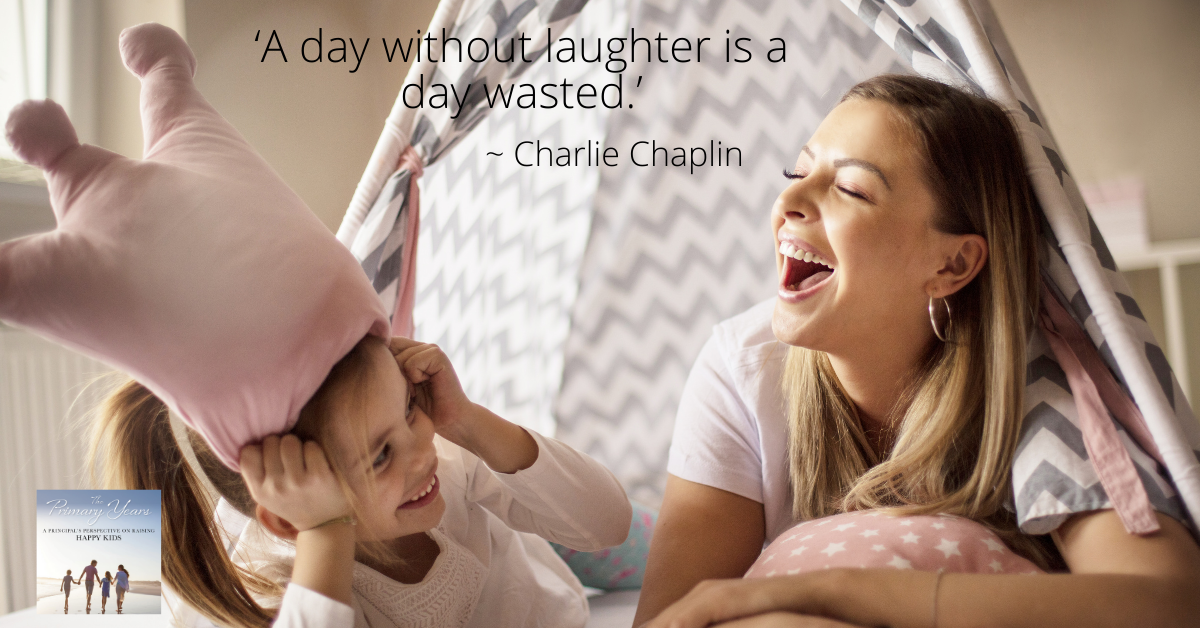
Become a witty, fun person around your children. You will get so much positive feedback from engaging with your children in this way. You feel more fully alive when laughing with your children.
Be imaginative. Draw, dance, skip with your children. It brings out the laughter and creativity of the family. This may mean being a little different from the usual person you are, but we are in times where we need to stretch our imagination and accept challenges.
Take care to limit the negative talk. People generally feel better and happier when less negative discussion is around.
Be a little more tolerant when mistakes are made. Less time spent in behaviour management and more time in being happy together makes for a calmer, more cheerful family.
Try noticing less mistakes and problems around the house. This will slow down feelings of anxiety and cheer you up.
These thoughts are all about finding different avenues in which to bring joy and laughter into the home. Every family has their own unique way of laughing and playing together. After all, happiness is a very natural state for a person in which to live. Our physical and mental health is all the better for laughter in today’s unsettling world. See it as another important immunisation against mental deterioration.
“A day without laughter is a day wasted.”
The Art of being Happy
Our children deserve to be happy. By nature of being a child, they are keen to smile, feel happy and enjoy their early years filled with imagination and light. Sounds idealistic I appreciate. We also know how we have to keep them in the real world which at times can be a quick shock to be taken out of fantasy, creativity and imagination.
However, being happy around your children is a warm and delightful way to demonstrate that life can and should be happy. Some of us have more serious dispositions. Some are lighter and look for the enjoyment and lighter side of life. Therefore, all families will be different in how they present themselves to their children.
We do need to teach our children that happiness can be found in any moments of the day, across a lifetime. It should be clear what makes us happy and we should be looking optimistically for things that make us happy. Such a disposition is mentally healthy. It is all about how we feel inside and we all naturally want to feel healthy and happy inside ourselves.
If a classroom does not have a happy disposition, the children’s capacity to learn is down. They want to be around happy light-minded teachers as they feel reassured and valued. Such teachers give them reassurance that they can make mistakes as they learn.
When hiring teachers, I was always looking for those teachers who savoured life and had a happy disposition. I owed this to the children they would teach.
My job as Principal was to ensure that the pal was very obvious in the word, Principal. The more they saw you as a friendly, happy person, the more approachable you seemed to them and therefore the more relevant.
Consider the following concepts that you teach your child when you are happy in yourself.

Let’s teach our children that happiness can be found in any moments of the day, across a lifetime.
They want to imitate that sense of being happy. You’re modelling here is so important.
They see it as the right way to be rather than anxious and unsettled. This means that they are less inclined to gravitate around people who bring them down.
They seek out similar children who likewise enjoy being happy and avoid those that bring them down.
When they are happy, they likewise will attract similar personalities.
Children begin to condition themselves into wanting to feel good. It is a more satisfying feeling than being down and intense. This is a positive outcome from being happy.
They are developing into more interesting young adults when they seek out happiness. People notice warm hearted people.
As they build on happiness, they become more insightful people who see life as a great opportunity and a place in which to be.
“Each day of our lives we make deposits in the memory banks of our children.”
How to learn about patience
This is a tricky one for children. By nature, they are slow to be patient especially when they are young. They are living in a fast pace world where social media teaches them that instant gratification and immediate response is to be expected and highly valued. One could say that learning patience is an outdated skill. Consider even simple things. For example, do we wait to have hot cross buns at Easter? No, we find them in the shops as early as February when the last dying ambers of Christmas are present.
We live in a world where instant satisfaction is expected and is regarded as the norm. It is not seen as impatience but a necessary requirement of daily life. It is all about we have a right to be happy all the time because we deserve getting what we want.
Teaching patience, therefore, is necessary as it does not come as an innate skill. People who work hard at being patient learn the art of waiting and with it the appropriate rewards. With patience comes a sense of being at peace and controlling the stress of having things straight away.
Fortunately, school teaches about the value of patience and accordingly rewards children for demonstrating an ability to be patient. Walk into any classroom and you will see many signs referring to dates when certain activities and celebrations will occur. There is often an excitable countdown to a special day. Children must wait for their name to be called out and at times may not be chosen straight away for activities. They have to go with the flow and learn the art of patience. And so, the list of reasons why patience is needed and demanded is clear in a school setting.
At home there are many occasions when patience can be encouraged as a great gift and is highly valued in your family. Waiting for a birthday is a typical one. The anticipation builds and then the excitement of the day. The wait is over and accordingly rewarded.
Consider:

We all find it difficult to be patient. This is not an innate skill.
Can you think of several occasions across the week, month etc. when you can reinforce and reward a child’s patience?
Put up calendar dates on the fridge that you are looking forward to. Talk about the wait and the anticipation that is building.
Do you know and admire patient people? Talk about them to your child. How were they rewarded? What made them so likeable?
Ask your child about the times they had to be patient in their school day. Note how being patient kept the class moving.
Demonstrate patience to your child in your own life.
“I have an important meeting with my boss this week. I will wait patiently for this as I think it is about my promotion.”
How about the general nature of being patient? We wait to be served in a restaurant or perhaps we are in a queue at the supermarket. There are many daily occasions when patience is needed. These are perfect times to show your child that being patient is the best way forward. Impatience only leads to stress and poor behaviour on occasions.
Slowly and steadily, you can demonstrate and highlight times when patience wins the day. A child needs positive examples, especially as the anxiousness of society deans quick and immediate responses.
“We could never learn to be brave and patient, if there were only joy in the world.”
The value of leisure
The activities that we choose to do in our leisure time certainly define us. It is worth contemplating how we use leisure time and how this influences our children.
How we show commitment and prioritise is all about leisure time. Are we a family that hitches up the caravan and disappears to the beach? Leisure time should be modelled for the children as high-quality hours quite separated from the hustle and bustle of work, school, etc.

The activities that we choose to do in our leisure time certainly define us.
Children need to learn that there are clear separations with leisure time from regular life. This teaches them that leisure time is an important investment in life. It nourishes the soul as well as the body.
The more they come to value the experiences, the more they will be searching for it in their own lives.
Take care to ensure that leisure is active and engaging. Watching television, screen time on computers is not giving direct attention to breaking from routine and setting up activities that provide real leisure for all the family.
Teachers invite students to plan leisure activities that will be enjoyed by the whole class. Often this involves active activities such as sport, art etc. Sometimes school excursions are all about celebrating leisure time together. It is a great bonding agent.
A few thoughts about developing sound leisure time:
Invite the whole family into a discussion about how they want to use leisure time.
Take risks. Suggest new leisure activities that take everyone out of their comfort zones. Our character reflects the leisure we choose.
Research what is available and within your parameters as a family.
Plan leisure time regularly and talk about it as part of your family routine. Let it become an important way of life and not just an incidental holiday.
Get the children involved in the planning and if it involves gathering and packing equipment, this can be a wonderful way for them to become involved. Let them own some of the leisure plans and preparations.
Remind yourself that creating effective leisure time with the family is yet another way of supporting their mental growth and demonstrating the value of rest and recovery from the routine of life. It strengthens self-awareness and is an important way of expressing family.
“‘In our leisure we reveal what kind of people we are.’”
Celebrate: it’s a key player in setting life time standards
We all love a celebration. They are so important in our understanding of the values and beliefs we all share in a family. These celebrations are strong reminders to our children that we value something special and we want to gather to remember or acknowledge an important time in our life.
Children look forward to celebrations and given that they may repeat themselves such as birthdays, anniversaries, rituals etc. a child will over time have them entrenched in their thinking as part of their life.
Schools set up celebratory dates from the beginning of the year. They understand that a celebration can be an opportunity to deepen the children’s awareness of some value etc. Take for example, the school’ anniversary each year of Anzac Day. The teachers will use this occasion to reinforce the values of that event and also celebrate the life of those men and woman who died for their country.
There are many aspects to celebrations. Sometimes it is simply about joy and sometimes it may have a deeper meaning such as a religious occasion, anniversary of someone’s life etc.
Keep in mind that the particular celebrations you share as a family reflect your unique qualities and are a chance to reinforce the richness of your family.
The following ideas may help in this area:
List the celebrations for the year with your child. Perhaps you may add in any extras that are important to celebrate given the circumstances.
Talk about why you celebrate the occasions and how you want to celebrate it. Children are wonderful at creating ideas for a celebration. Remember happy, positive, long term memories are born from such experiences. My children still vividly remember shopping for and buying a wedding anniversary cake for myself and husband when they were preteenagers. They were so excited to plan and surprise us and they still remember this occasion after many years.
When something special happens in the family is it an occasion to gather perhaps for a meal and celebrate it together? Be an opportunist and find reasons to celebrate. You won’t have to look far.
Think about celebrating what you want to see more of. Perhaps your child may be working hard to improve their writing and they find success through this. Then share a meal and praise their efforts. It doesn’t take much to see things that you would like to acknowledge.
Be creative in how you celebrate and invite your child into the planning process. In this way, they will take more ownership of the event. They will remember the occasion more profoundly.
“Children have never been very good at listening to their elders, but they have never failed to imitate them.”
Laughter. It’s good for the soul.
How often do you laugh? Are you a family that laughs together and often?
Can you remember the last time you had a good belly laugh?
When you think about your past as a child, do you remember people who were always laughing and did this make you feel good?
Laughing is infectious and important for good mental health and for personal happiness. Cheerful people make us feel better and no surprises, we are drawn to them in a positive way.
In today’s climate with so much intermittent anxiety connected to the pandemic, how about increasing laughter in your family? For some, this will be easy but for some families, it may take some planning and work.
Laughter is like a tranquillizer. It makes you feel alive and connected to those who are enjoying a laugh with you. It is a bonding agent.
Sometimes it is not easy to create humour in difficult times but with some creative thinking, I am sure you can find some happy, warm moments at home that can bring instant laughter into the house.
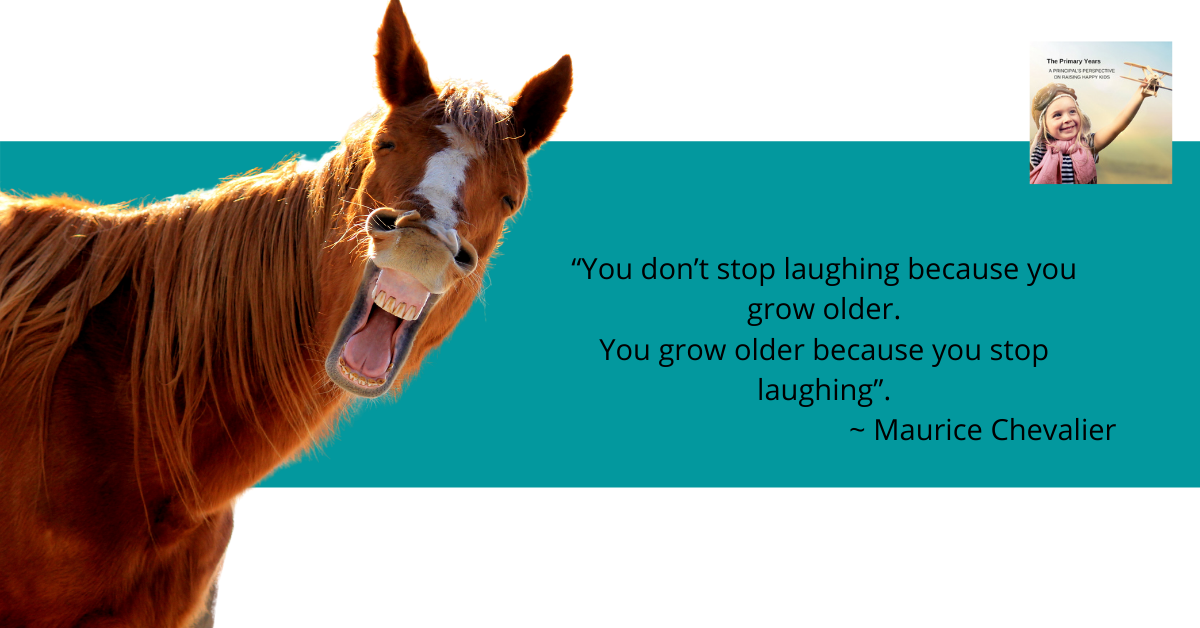
Laughing is infectious and important for good mental health and for personal happiness.
Remember that children love to laugh and crave feeling positive. This is natural to them. They will welcome all the humour you bring into your family life. Your laughter reassures them that they are in a safe happy place. They certainly want to be there.
Consider:
A joke book. Read some jokes at dinnertime. This can be fun for everyone.
Get into the habit of telling your child the funny things that happened to you today. They love to hear positive stories.
Watch a funny movie together. This can be such an upbeat time for families.
In working with children, teachers understand that the tone of their classroom should be positive and happy. To this end, they always welcome a joke and encourage children to share laughter amongst themselves. They understand that joking lifts the spirit. I noticed that if I was happy and talked about some funny situations with children, they were more inclined to talk to me about their concerns.
Shutdown comes with children when they feel insecure and doubt the presence of positivity around them.
Having a cheerful, happy disposition attracts others to you. Having a sense of humour is a gift to cherish. It also lightens the burden of the day.
If our children learn to laugh and come from a home environment that encourages laughter, this will more likely encourage friendships in their life. They then feel comfortable in their connection with others. It also builds their self-confidence in expressing themselves in front of others.
“You don’t stop laughing because you grow older.
You grow older because you stop laughing.”
So, let’s talk about mental health.
We are talking quite a lot about the mental health of our children especially during these difficult times living through the pandemic. There is no doubt that anxiety can be present all around us in varying ways. The news, negative discussion amongst family members, statistics every day and so the list goes on to suggest that mounting anxiety can occur.
Your child will, of course, be processing all the news they hear. They will also read the signs you give them through your concerns and let us not forget the very visible presence of wearing masks each day. The mere fact that they are working from home and online presents its own worries and is another example of how isolating it is as a way of life.
We cannot dismiss the above, but we can put in place certain behaviours and actions that help a child cope during these difficult times. It is all about finding strong coping skills during these difficult times.
Consider the following which I believe may have some ideas for you to consider in reducing some anxiety for your child.

We are talking quite a lot about the mental health of our children especially during these difficult times living through the pandemic.
Be happy. Show them some optimistic news such as the numbers reducing. A smile makes such a difference. It is a great feel-good tool.
Talk about the wonders of modern science and how a vaccine will be developed that will combat the pandemic.
Keep busy. Idol time has a way of inflating anxiety.
Set up a schedule where you all are aware of how the day will be spent. Ensure that it is variable and the child has to focus on different directions throughout the day. The more you shift and change thinking, the more rethinking is necessary for the child.
Put into it elements of surprise to keep them guessing.
Play a lot and laugh a lot. There is so much humour to be found with and around children.
Watch humorous movies that bring the family together and show the funny side of life. This, of course, includes reducing individual time with intense computer games.
Is there a significant family project that you can work on? For example, can they paint their bedroom with assistance? Are they able to make a go-cart? Projects that take time and effort can be so much fun. They are impressive because of their scale.
Read more stories to your child. Is there a family time when everyone reads together?
I have mentioned before the value of playing together. Here I add the value of being physical together. This could be playing football, soccer etc. Contact games are a wonderful way to disconnect from problems. The physical exercise releases all the necessary chemicals to genuinely feel better.
Playing music that you can share together and dance for some families can be a great release.
The suggestions are just a few ideas. Think about what makes your family happy and focus on building that happiness up on a regular basis.
“What mental health needs is more sunlight, more candor, more unashamed conversation.”
It’s all about the spirit of Christmas and that is where we find our Santa.
Who doesn’t love the excitement that mounts as Christmas approaches? If you know someone who doesn’t then just say “baa humbug” to them! Our children bring us into the fever pitch building to the big day. All children young and old love to believe in Santa and I say why not?

I think Santa is for everyone and could be in anyone, if they enlighten the family, the giving nature of Christmas and the message of love and connection.
The image of Santa, the smiling man with a white beard and a red oversized suit, the giver of gifts, the jolly warm souled person who can only imagine making people, especially children happy, is, after all, a powerful image of pure joy. He makes us feel happy and brings us closer to connecting with others. So, if we cannot believe in the real image of Santa, create in your own mind, the spirit of Santa who brings us all together to simply create a feeling of happiness.
We all need a little Santa in our life and Christmas can be that time when we all come together, exchange gifts to acknowledge our love for our children and each other and reflect more deeply on the gift of family and friends. This may of course, also highlight aspects of family that are not intact and sadness can be close to the surface. Absence and loss can be very real at this emotional time. However, maybe these unsettling thoughts can enrich us by concentrating and enjoying in what we do actually have in our life.
The concept of jolly Santa, the universal lover of people and goodness is also about raising awareness of giving to those who are less advantaged. Ideas such as discrimination, prejudice, isolation. competition should be far from our minds and action at this time of year. They should fade away, as we focus on all that is good and wholesome in our life.
This is a wonderful time as a parent to raise your child’s awareness of giving to others. Perhaps take them to a communal giving tree to offer a gift to another child less likely to receive a gift. There are plenty of charities very active at this time of year where families can tap into supporting them. Also, teach your child about their mission and direction to support others less blessed in life.
By bringing your child into a deeper awareness of the message of Christmas, you are teaching them about sharing, social justice matters at your local level and above all, teaching them that by giving you actually receive so much more. You then morph into the spirit of Santa where you recognise that by giving, sharing and celebrating each other, the world is a better, happier place.
Christmas is a highlighted time to draw attention to supporting and loving each other a little more. So let’s Santarise ourselves a little as we get closer to the big day. It can’t hurt to be more optimistic, more engaging with your children and happier.
I think Santa is for everyone and could be in anyone, if they enlighten the family, the giving nature of Christmas and the message of love and connection.
“Santa Claus is anyone who loves another and seeks to make them happy.”
Our children can teach us so much.
Isn’t it wonderful how much joy we gain from watching our children? Their laughter, childhood ways, imagination and sense of fun give us life.
This article is inviting us to stop and reflect on how children are a source of joy. We can learn so much about the beauty of life through their eyes. After all, being an adult can be very boring. It can also drain our sense of fun and reduce our awareness of all that is life-giving around us.

Let your child show you the way to being lighter and more positive about life.
At school, it was my common practice that if I was a having a bad day, weighed down by various matters, I would take myself around to the classrooms, just to enjoy the chatter, humour and life in the classroom. It lifted my spirits and made me realise how much I can learn from children. Let’s consider our children’s youthfulness as a happy pill and one that puts us in a better mental framework.
Their simple wisdom, unshakeable love for their parents, innocence when it comes to seeing the best or worse in a situation, teaches us that sometimes we can adopt a lighter more manageable approach to life.
All that we understand can be seen from different, less judgemental eyes. All that we see can be understood with better understanding and more general acceptance. As children have their faith in those around them, they can teach us how not to lose hope and belief in others. They also teach us how to simplify understandings, taking out the anger and hurt.
Here are some thoughts that invite us to reflect on times with our children that can be beneficial for improving our spirit and disposition.
Laugh with your children. See the funny side to their actions.
Listen to their words. Often simply expressed but with powerful messages.
Watch them play and join in to the experience. They often talk about all sorts of interesting things when playing. It is especially enjoyable listening to their chatter in a sandpit.
Children love to draw. Watch them and talk about what their drawings are all about. As an adult doodling can be another form of drawing in a state of relaxation.
Sing with your child. Some of the songs you will know and the repetition is often comforting.
Enjoy the changing expressions on their faces and the interesting body language. These shift so regularly and are a key to how they are processing information.
Let your child know that you learn from them.
“I love the way you use play dough. Can you show me how you created that shape?”
Children have a different sense of time to busy adults. Perhaps we can adopt more time to things we enjoy doing and reduce the busy things we do that clutter the day.
Allow them to be creative. This can go in many directions that will surprise you. Their creativity abounds in so many ways.
Remind yourself by talking to your children about the fun parts of your childhood. What made you laugh and what drove your spirit.
This article invites the parent to simply enjoy the moments with their children and notice the unique childlike manner that is so attractive to them.
Time passes quickly and those moments where we learn about our child in their childhood become less and less as they grow older. My belief is that if we capture their joy, we will carry it with us and it will give us some positive feelings along the way.
Let your child show you the way to being lighter and more positive about life. Adopt a little of their liveliness and enjoy the day.
“If you carry your childhood with you, you never become older.”