It’s all about the spirit of Christmas and that is where we find our Santa.
Who doesn’t love the excitement that mounts as Christmas approaches? If you know someone who doesn’t then just say “baa humbug” to them! Our children bring us into the fever pitch building to the big day. All children young and old love to believe in Santa and I say why not?

I think Santa is for everyone and could be in anyone, if they enlighten the family, the giving nature of Christmas and the message of love and connection.
The image of Santa, the smiling man with a white beard and a red oversized suit, the giver of gifts, the jolly warm souled person who can only imagine making people, especially children happy, is, after all, a powerful image of pure joy. He makes us feel happy and brings us closer to connecting with others. So, if we cannot believe in the real image of Santa, create in your own mind, the spirit of Santa who brings us all together to simply create a feeling of happiness.
We all need a little Santa in our life and Christmas can be that time when we all come together, exchange gifts to acknowledge our love for our children and each other and reflect more deeply on the gift of family and friends. This may of course, also highlight aspects of family that are not intact and sadness can be close to the surface. Absence and loss can be very real at this emotional time. However, maybe these unsettling thoughts can enrich us by concentrating and enjoying in what we do actually have in our life.
The concept of jolly Santa, the universal lover of people and goodness is also about raising awareness of giving to those who are less advantaged. Ideas such as discrimination, prejudice, isolation. competition should be far from our minds and action at this time of year. They should fade away, as we focus on all that is good and wholesome in our life.
This is a wonderful time as a parent to raise your child’s awareness of giving to others. Perhaps take them to a communal giving tree to offer a gift to another child less likely to receive a gift. There are plenty of charities very active at this time of year where families can tap into supporting them. Also, teach your child about their mission and direction to support others less blessed in life.
By bringing your child into a deeper awareness of the message of Christmas, you are teaching them about sharing, social justice matters at your local level and above all, teaching them that by giving you actually receive so much more. You then morph into the spirit of Santa where you recognise that by giving, sharing and celebrating each other, the world is a better, happier place.
Christmas is a highlighted time to draw attention to supporting and loving each other a little more. So let’s Santarise ourselves a little as we get closer to the big day. It can’t hurt to be more optimistic, more engaging with your children and happier.
I think Santa is for everyone and could be in anyone, if they enlighten the family, the giving nature of Christmas and the message of love and connection.
“Santa Claus is anyone who loves another and seeks to make them happy.”
Our children can teach us so much.
Isn’t it wonderful how much joy we gain from watching our children? Their laughter, childhood ways, imagination and sense of fun give us life.
This article is inviting us to stop and reflect on how children are a source of joy. We can learn so much about the beauty of life through their eyes. After all, being an adult can be very boring. It can also drain our sense of fun and reduce our awareness of all that is life-giving around us.

Let your child show you the way to being lighter and more positive about life.
At school, it was my common practice that if I was a having a bad day, weighed down by various matters, I would take myself around to the classrooms, just to enjoy the chatter, humour and life in the classroom. It lifted my spirits and made me realise how much I can learn from children. Let’s consider our children’s youthfulness as a happy pill and one that puts us in a better mental framework.
Their simple wisdom, unshakeable love for their parents, innocence when it comes to seeing the best or worse in a situation, teaches us that sometimes we can adopt a lighter more manageable approach to life.
All that we understand can be seen from different, less judgemental eyes. All that we see can be understood with better understanding and more general acceptance. As children have their faith in those around them, they can teach us how not to lose hope and belief in others. They also teach us how to simplify understandings, taking out the anger and hurt.
Here are some thoughts that invite us to reflect on times with our children that can be beneficial for improving our spirit and disposition.
Laugh with your children. See the funny side to their actions.
Listen to their words. Often simply expressed but with powerful messages.
Watch them play and join in to the experience. They often talk about all sorts of interesting things when playing. It is especially enjoyable listening to their chatter in a sandpit.
Children love to draw. Watch them and talk about what their drawings are all about. As an adult doodling can be another form of drawing in a state of relaxation.
Sing with your child. Some of the songs you will know and the repetition is often comforting.
Enjoy the changing expressions on their faces and the interesting body language. These shift so regularly and are a key to how they are processing information.
Let your child know that you learn from them.
“I love the way you use play dough. Can you show me how you created that shape?”
Children have a different sense of time to busy adults. Perhaps we can adopt more time to things we enjoy doing and reduce the busy things we do that clutter the day.
Allow them to be creative. This can go in many directions that will surprise you. Their creativity abounds in so many ways.
Remind yourself by talking to your children about the fun parts of your childhood. What made you laugh and what drove your spirit.
This article invites the parent to simply enjoy the moments with their children and notice the unique childlike manner that is so attractive to them.
Time passes quickly and those moments where we learn about our child in their childhood become less and less as they grow older. My belief is that if we capture their joy, we will carry it with us and it will give us some positive feelings along the way.
Let your child show you the way to being lighter and more positive about life. Adopt a little of their liveliness and enjoy the day.
“If you carry your childhood with you, you never become older.”
Is your child developing a growth mindset?
Call it what you like but this is all about teaching your child that you can look at life in various ways. The best and most positive way to go forward is to develop a growth mindset and not a fixed mindset. This is all about looking at situations and seeing how it can be understood from a position that will lead to growth, new understandings etc.
This is all about understanding that the growth of your capabilities is all about how you manage it. As a parent we encourage our child to see situations as positive opportunities rather than having a fixed outlook. For example, if a child comes home from school and talks about how he didn’t play well at lunchtime with his friends and so he will not play with them again. After all he feels better to not go where he has failed. This is definitely a fixed mindset. Rather we would be teaching our child to consider talking to his friends about the game or perhaps playing a different game with them. Whatever the discussion, it is about not seeing the incident as failure but an opportunity for growth.

We can help develop enlightening in the child, the idea that we learn from anything we do.
“Sounds like you need to talk to your friends about games that work for everyone.”
Frequently talking this way about incidences that have not gone well is teaching the child that there are many ways at looking at situations and the best way forward can be to use a failed situation to improve yourself.
“You seem upset that the test didn’t go well. How about talking to the teacher about what went wrong so that you can get better at that problem.”
Here you are reflecting on the fixed outcome and turning it into an opportunity.
“Oh, dear the sandcastle fell down. Let’s look in the bucket to see how we can make a better one.”
By having the mindset that you will encourage your child to see the problem from a growth aspect teaches them how to approach situations that are not successful. Also, in your own life modelling how, you reflect on failed situations, turning them into a learnt process is important for the child to observe how you manage situations.
In working with children that felt unsuccessful and would give up easily, teachers would often invite them to set small goals or simply lay out in front of them different ways to see the problem. This was all about looking at re-framing the issue.
When I worked with children who seemed to have a fixed mindset about situations, we would discuss all the positive things that could be derived from the situation. We would often list them and discuss what we learnt from them.
“You seem to be unhappy that you cannot do spelling very well. Let’s look at the words you got correct that shows that you can spell”.
This article is about enlightening in the child the idea that we learn from anything we do. This especially includes when things go wrong. These occasions give us a chance to continue to get better. It is all about finding that hope is in every situation if you look hard enough.
“Anyone who has not made a mistake has never tried anything. ”
Try being child-like. It is a great leveller
One of the great advantages of being a parent is that your child will take you through all the stages of growth, physically, intellectually, socially and emotionally. They will reintroduce you to childlike ways. How much therapy can that be!
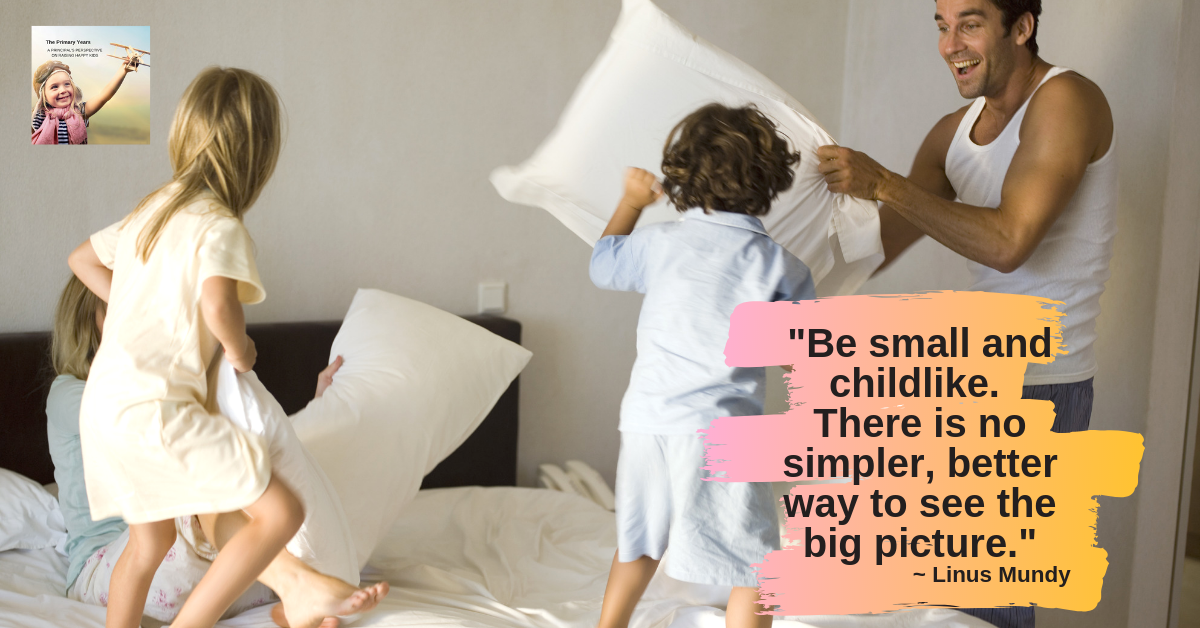
Playing with your children brings more benefits than you realise.
Whilst I appreciate our children can be exhausting and frustrating from time to time, they do give us such wonderful opportunities to relive our childhood in some way. Perhaps your childhood wasn’t so much fun, now is a time to enjoy the innocence and simple joy of being a child with your own child.
Sometimes being an adult and maintaining the pressure of living up to many and varied expectations can be very waring.
When you take time out to share in some fun and uncomplicated joy with your child, the world is a happier place to be. It also demonstrates to your child, that you can relax and share in their world, with all its magic and imagination. You are modelling that their world has its own charm and meaning in which you want to share. You are valuing their world and not placing expectations on them to be sensible, grown up etc.
In working with children, I was in a very blessed space as a workplace. If I wanted to ease the pressure of the office, I would often enjoy playing the games on the yard with the students, join in netball games, share in choir etc. I certainly felt better from being part of their world. I would return to the office much refreshed.
Consider:
Visiting sandpits and together play in them. Beaches are wonderful spaces to play in the sand, no matter what age the child. They provide a wonderful climate to play sport such as cricket etc. Notice all the fun, families have on beaches in Summer. Beaches provide entertainment for all.
Playing formal games at home. Simple games such as monopoly can provide hours of fun.
Play Lego with the children. Are you as creative or as skilled as them?
Drama is a great imaginative tool. Act out simple plays and stories together. Children love the dress ups. Join in with them. Sometimes using music, singing together leads to much joy. Dramatizing books being read is also a great fun way to engage.
Physical activities such as bike riding together, rollerblading and other active games in the park can lead to so much enjoyment.
Children love to write imaginative stories. You can join in and add sections to it.
Draw together. This can be even using chalk on the concrete.
Invite your child to recommend the game and join in. Younger children are very quick to create stories and adventures.
These considerations may not be new to you but the following reasoning is behind the idea of joining in the world of the child.
It is mentally healthy to play and relax. What better way than to do it with your children.
As an adult taking a break from being a grown up is a positive way to improve mental health. Sometimes maintaining the adult in you is hard work.
By joining in with your child, you relive some memories and trigger some smiles. All positive for everyone concerned.
Finally, who says we have to lose all our childhood and grow up.
A better-balanced adult who can see life from many angles including that of a child is a more interesting person with high emotional intelligence.
“Be small and childlike. There is no simpler, better way to see the big picture. ”
Let’s celebrate the simple joys of being around our children.
How much thought do we give to how many times we just smell the roses and experience joy with our children? Time passes so quickly and with it, life experiences move swiftly passed our consciousness. What can stay and linger in our minds is how we shared a laugh and simply enjoyed the moment with our children.
There is nothing more rewarding than walking into a classroom and hearing laughter from the teacher and children. That is a clear sign that the children are enjoying their learning experiences and trust in their environment.
Doing things with your children that you love should bring a sense of joy to all involved. Simply being happy with your child is an immense success as an effective parent. This sends a message to the child that all is well with themselves and parent.
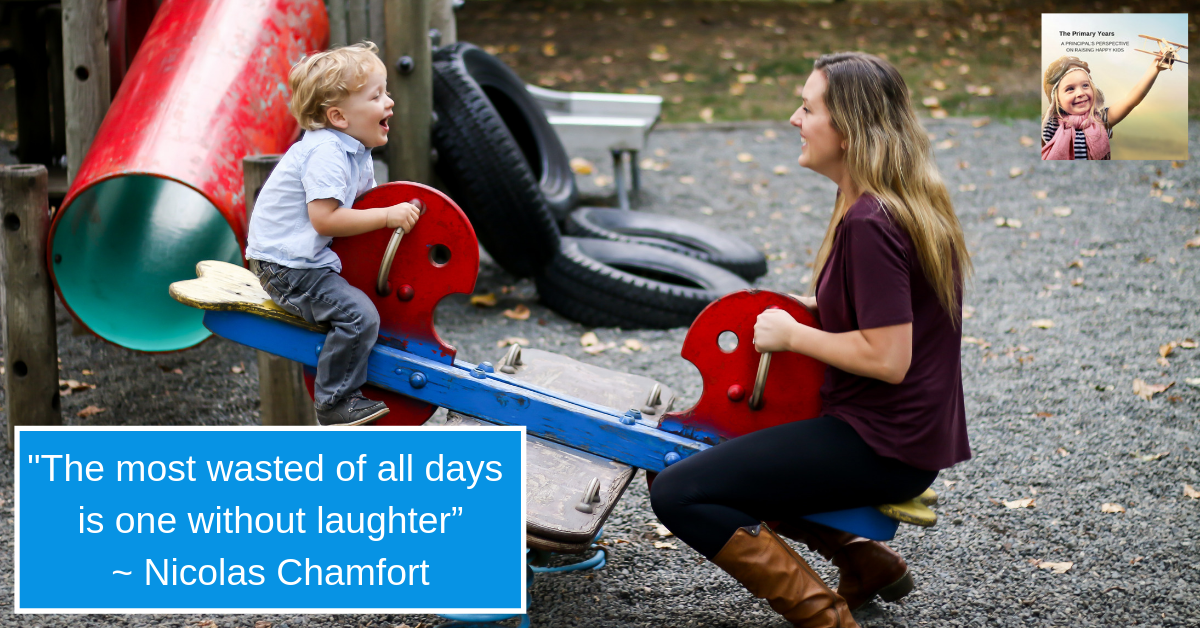
The calm, steady sense of being joyful also feeds into a child’s sense of security, reducing anxiety and stress. Simple things like laughing about a joke together, telling jokes, noticing together the funny side of a situation. All of these display a positive, healthy disposition to life and send signals to your child that being happy is the best state in which to live.
When working with children, it was always important to set the scene before talking about matters that may concern the child. We would start with something light such as talking about the great sports day we had yesterday or the funny moment when the bell went at the wrong time. This gives a message to the child that we can discuss matters knowing that we share a common love of life in a positive setting.
Start looking at simple activities you do together as joyful times. Even chatting together in the car, playing “I spy” etc. is a time of joy and fun. It about being alive and positive together.
Family games are also a wonderful time to enjoy each other’s company and to find a sense of joy in the occasion. Choose funny books to have a laugh together when reading.
My own children, now well grown, will occasionally talk about the funny or quirky situations they shared with their mother. These are memorable and tell a story. Remember parents do not have to be perfect, just normal is quite enough.
If you are busy and tired take care not to show this tension to your child. These occasions can be very real road blocks for having happy, quality time together.
Try keeping in mind that any situation no matter how ordinary can become a time of joy. All it requires is your awareness of how a situation can turn into a happy experience. For example, if all is quiet in the car, chat about the funny sign you just read or sing a song together.
Happy people that see the joy in everyday activities are very positive people that others enjoy being around. This blog is about finding the joy and sharing the moment.
“The most wasted of all days is one without laughter”
A NIGHT TIME DISCOVERY
Do you just love chatting to your child at bedtime? There is something magical about being together and disclosing the stories of the day. This is a time when children feel safe and secure enough to chat to you intimately. One great way to invite your child to talk about the day is to simply say:

One great way to invite your child to talk about the day is to chat at bedtime.
“What made you happy today?”
Also another way to express the day is to ask:
“What made you feel good about yourself today?”
A simple, harmless invitation to talk about the day. It doesn’t focus on the negative at all. Often from the child will come their feelings of being happy but also they may chat about the incidence that didn’t make them feel so good in themselves.
This is a real listening time and doesn’t need to be a time of solving problems.
The invitation to just chat about the happy experiences makes the child relive positive feelings that reassure them. This is important before bed as it gives them a feeling of being safe with their thoughts. Of course having the reinforcement from the parent makes it all the better.
Sometimes you may find the child asking you the same question,
“What made you feel good today?”
This is a perfect time to talk about the values and experiences that enriched your life on that day.
The purpose of using night time to reflect positively on the day is an excellent way to teach children a little about positive psychology which is all about reinforcing the positive and diminishing the negative which acts as an obstacle to happiness.
When working with children at school they would often tell me that the most looked forward to time was talking to parents at bedtime. It was time to feel secure and happy within themselves. The presence of having a parent present gives them such emotional reassurance that all is well with the world.
How to get rid of that blue feeling
It’s hard to keep the mood positive all the time, even with children. They get quite crowded with thoughts and desires and sometimes struggle to put order into their life.
It is not uncommon to find a child feeling and looking quite idle and down in the day. When this occurs, there is a simple and easy way to lift that spirit and most importantly to give the child strategies to help them control their moods. Remember what you are doing here is teaching your child how to manage themselves better from time to time.
Suggest that they write a list of activities or things that makes them feel happy. This could include everything from Lego to dolls to playing games etc. The point of this exercise is to discuss the list of suggestions that can very quickly shift a mood or temperament.
Put the list somewhere visible and discuss the possibility of engaging in some of these activities or simply discussing the fun and joy they receive from them.
The purpose of this exercise is to give the child a way out of thinking moody thoughts. It is about enlightening them on the positive and distracting their negative feelings. Keep the list visible for a while and suggest that the list should be upgraded from time to time especially when new experiences come into play.
When working with children it was quite common practice that they would write down activities or resources that made then feel good. It acted as a distraction to lower sad feelings and it also proved an excellent vehicle to talk about what was valuable in their life.
Children generally like to write or draw their feelings and so it is not an uncommon way to express themselves. A younger child without writing skills can of course simply draw the things that make them feel happy.
A good modelling technique is to demonstrate to your child that when you are feeling low you write a list of things that make you feel better. This modelling is a great example to them that you use similar strategies to deal with mood swings.
A little bit of distraction can go along way to redirecting feelings.
“Start writing no matter what. The water does not not flow until the faucet is turned on.”

It is not uncommon to find a child feeling and looking quite idle and down in the day.
Enjoying the moment with your child
How time passes when we simply don't notice the uniqueness of our child, the journey of their growth or their shift from childhood into adolescence, from adolescence into adulthood. This article merely touches on the value of stopping to smell the roses and enjoy the moment with the child.
We are very explicit with our families in terms of the things that we want to pay attention to and these are often around functional and aspirational things. For example, achieving at school, playing sport, doing homework etc. We are all keen to put emphasis on very typical aspects of our life which are common in many families. We expect to be attentive and reflective around such important issues.
What is unique are the individual moments to be shared with your child as they develop over the years. For example, if you bike ride with your child, stop for a minute and reflect on how joyous that experience is for all of you. When you sing a song together, set the kitchen table together, watch a humorous movie together, these are all times to reflect on that special moment that is a snap shot of your life together. It is difficult for parents with young children to imagine their child older, more independent. Time passes and this comes around quicker than we can imagine. Ask any parent whose last child is leaving primary school! A great way of understanding the preciousness of the moment is to look back on photos. Here we easily stop and reflect on that scene and contemplate how things have changed.
We cannot suspend time, but there is some evidence that time accelerates in our mind when everything is going well. Try to simply take some time to enjoy the moment whether it be watching your child in a classroom, sports field, play ground etc and reflect on the joy of that moment. Being more in harmony with the uniqueness of the present moment makes for a calmer disposition all round.
Here are a few thoughts to get you in a reflective mindset.
Take a big breath and just look around.
Look for the lighter side of the moment.
Tell yourself why this is special.
Pretend you are snapping a photo of that moment and remind yourself why?
“If you are always racing to the next moment, what happens to the one you are in?”

Getting the most out of time together
As parents we work hard to give our children fulfilling experiences. However, I challenge you to go outside the norm and give everyone in the family an exceptional and challenging experience. This is the stuff that makes for future stories and great memories when you take yourself out of the ordinary and into the unknown. For example, how about an adventurous and challenging hike?
If you are a family that has a focus on one sport activity, put it aside for a while and do something quite different.
I always remember the reaction when I put to the school parents that we would take our seniors to Canberra for the first time. The anticipation, the anxiety of some parents was high, but what an adventure we all had. I can honestly say I don’t remember much of other school camps over the years. However, this took us well out of our comfort zones. I know that the children still have fond memories including staff and that was several years ago.
Consider the adventure and challenge in your plan. There is often a much greater need to depend on each other in more demanding circumstances and this leads to stronger bonds between family members.
Why not simply talk about it as a family and together plan something that will literally present some challenges, create new experiences and bring you all into new territory together.
As a family when our children were teenagers, we charted a yacht and sailed around Tahiti. This was a little scary but it still is a source of much conversation and enjoyment when reliving the occasion.
In order to strengthen bonds in family, it is worthwhile considering some new experience that requires developing new skills. Plan it together. The more the children are involved in the organising, the better for all. It can even raise anxiety a little but ultimately it is a shared experience unique to you as a family.
“FAMILY…
We may not have it all together
But together we have it all.”

Create new experiences that bring your family into new territory together.
What’s in a smile?
There is much to be said for a smile. Mother Theresa was known to say, “Love begins with a smile”.
Our body language often speaks to a child more than words. How we communicate is not just through speech but also through our physical demeanour and especially the expressions on our face, volume of voice and the tone of voice. A child is keen to read all messages that you give them. Especially, if there are concerns or wants, behavioural issues etc.
We hear quite a lot about mindfulness and the value of remaining calm and steady in crisis, however difficult this may seem. It is actually true. The calmer and more in control you are, the more likely a child will relate to you over matters that are more significant.
Of course, the human condition sometimes makes it difficult not to express feelings that are quite obvious. We all get tired and reactive at times. Generally, children sense when our capacity to cope is down.
When working with children, I would notice how quickly they would switch off if I appeared unsettled or changed the way I normally reacted to situations. They were excellent at reading the signs. Therefore, I needed to recognise in myself when I was not ready to chat to children and find the time to listen. They would also tell me that they would carefully read their parent’s body language before talking to them about matters that troubled them.
If a child feels secure in our presence and the body language that we use around them is consistent, warm and inviting, they will invite us into their world.
The tone of our voice, how we stand and listen, where we situate ourselves when talking, how we use our hands, the space we take in chatting, all of these are body language signs which send messages to a child. Remember, the physical difference between you and a small child. Try and sit when discussing matters to give them more security. Use warm eye contact and keep the voice calm and steady. All of these behaviours reassures a child that the lights are green and chatting is worthwhile.
Consider the following:
If you feel that you cannot remain calm and steady then delay talking to your child over a matter to be discussed.
Let your child know if you would prefer to talk at another time when you felt more relaxed or less distracted.
Keep steady and avoid doing other tasks while talking. Be present for that moment.
Ensure that when you are chatting choose a place that will not distract you from staying focused.
Your regular modelling of being consistent when talking to people is noticed by your child.
As with positive modelling in body language, ensure you use positive talk while engaging in conversation.
Learn from being positive with body language and notice your own improvements with each occasion.
Smile a lot. A child needs reassurance that all is well with the world.
“Anyone can hold the helm when the sea is calm”

A child needs reassurance that all is well with the world.