How can parents best help their child at school
School can sometimes make parents feel as though they should be constantly checking, organising,
reminding, and solving.
The most helpful role a parent plays is not to become the manager of school life. It is to become the guide.
A guide doesn't walk every step for you. A guide helps you understand the journey.
Here are some wise ways to guide your child through school:
Ask before you advise
When your child tells you about a problem, resist the temptation to solve it.
Instead ask:
“What do you think you could do?”
That simple question helps children develop judgement, confidence and problem-solving skills. Your child doesn't always need answers. Sometimes they need your belief that they can find their own.
Be interested without taking over
Know about school. Know their friends, their interests and the things that matter to them.
But don't become their personal school manager.
There is a difference between asking:
“How did your test go?”
and demanding:
“What mark did you get? Why wasn't it higher?”
Interest opens a conversation. Pressure can close one.
Let school belong to your child
School is your child's experience—not yours.
They will have wonderful days, disappointing days, difficult teachers, friendship problems and moments when things go wrong.
You don't have to remove every obstacle.
Sometimes the most valuable response is:
“That sounds difficult. What do you think you could do about it?”
You are beside them without taking the journey away from them.
Praise the qualities that will carry them through life
Notice persistence.
Notice kindness.
Notice courage.
Notice curiosity.
Notice when your child keeps going after something goes wrong.
Tell them what you see:
“I noticed you didn't give up.”
Those are the qualities that will serve them long after they leave school.
Don't make every problem a parent problem
Children need to learn that some problems can be handled without an adult immediately stepping in.
A forgotten book, a disagreement with a friend, a disappointing result all can sometimes become a valuable lesson in responsibility.
Ask yourself:
“Does my child need me—or does my child need the opportunity to learn?”
That question can change your parenting.
Make home the place where school pressure comes down
Home is not another classroom.
Your child should know that they are loved because of who they are, not because of their sporting
achievements or school performance.
Let home be the place where they can exhale.
Keep the long view
One disappointing result is not a disappointing child.
One friendship problem is not a failed childhood.
Parents sometimes see today's problem as though it will last forever.
A guiding parent can say:
“This is difficult right now—but it won't always be this way.”
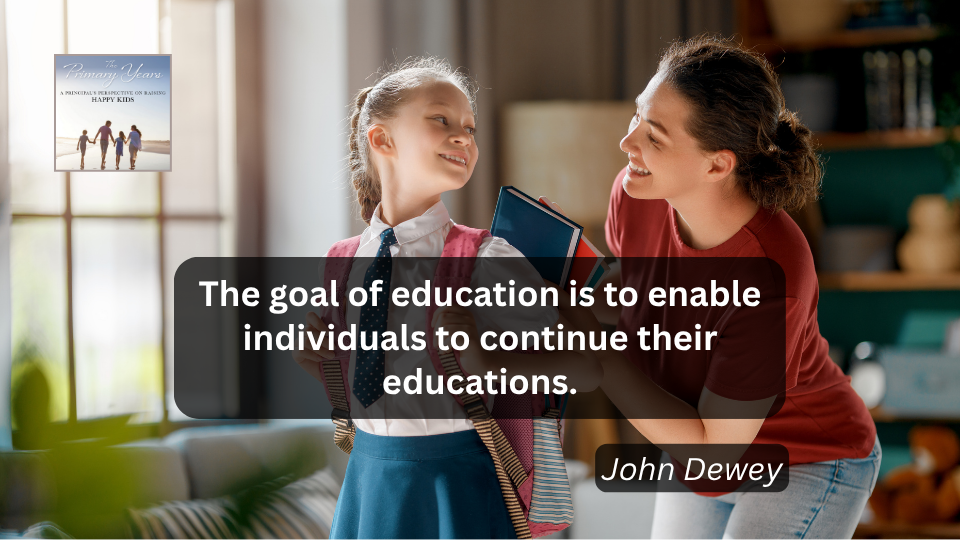
“The goal of education is to enable individuals to continue their educations.”